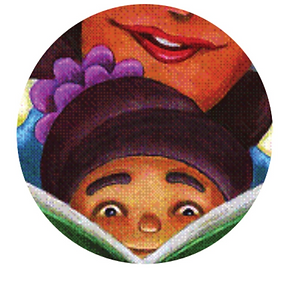
FIRST LIBRARY® INTRODUCES ITS NEWEST PROGRAM - BUMS & BOOKS!
Free Books. Free Diapers. A Stronger Start for Families.
First Library supports first-time, single mothers by mailing free books, diapers, and early-literacy resources directly to their homes.
Search this site
126 results found with an empty search
- Participating Communities | First Library
Participating Communities First Library is proud to offer their first born (of single first time mothers) free reading program in the following communities in New Jersey .* Essex County, NJ Program is available in the following zip codes. Livingston 07039 Middlesex County, NJ Program is available in the following zip codes. Carteret 07008 Edison 08837 North Brunswick 08902 Port Reading 07064 Monmouth County, NJ Program is available in the following zip codes. Perrineville 08535 Morris County, NJ Program is available in the following zip codes. Chatham Borough 07928 Chatham Township 07928 Morristown 07960 New Vernon 07976 Union,NJ Program is available in the following zip codes. Springfield 07981 Participating Communities First Library is proud to offer their first born (of single first time mothers) free reading program in the following communities of Virgina.* Fluvanna County, VA Program is available in the following zip codes. Lake Monticello 22963 C omplete the application form below for participation the First Library program. Please fill out and submit Parent Pledge. First Library Application Form
- CATs - Community Action Team Members | First Library
Sign up to become a CAT (Community Action Team) Volunteer! Spread the word about First Library's mission and program. Print and distribute our flyer in your community. Promote our fundraising efforts. See below. Name* Community* Zip Code(s)* Email Address* Phone* Message SUBMIT Spread the word about First Library and its fundraising efforts for preschoolers in your community. Print and distribute our flyer in your community today! REGISTER TO PRINT OUR FLYER
- First Library's Free Book Gifting Chapters
First Library's Free Book Gifting Chapters
- Literacy Facts @ First Library
Literacy Facts Giving children access to print materials is associated with positive behavioral, deducational, and psychological outcomes. Frequency and the quality of words a child hears during their first three years of life are critically important in shaping the child's language development. Children who are read to at least three times a week by a family member are almost twice as likely to score in the top 25% in reading than children who were read to less than three times a week. Children growing up in homes with many books, get 3 years more schooling than children from bookless homes, independent of their parents' education, occupation, and class. Children in professional families hear approximately 11 million words per year; children in working class families hear 6 million words; and children in welfare families hear approximately 3 million words annually. 62% of parents with a high socioeconomic status read to their children every day, compared to 36% of parents with a low socioeconomic status. Research has found that 61 percent of low-income families have no books at all in their homes for their children. In low-income neighborhoods the ratio of book to child is 1 to 300 (1 book for every 300 children). 87% of students who reported reading on their own time once a month or more performed at the Proficient level, while students who never or hardly ever read for fun performed at the Basic level. Students who read for fun every day scored the highest. Out-of-school reading habits of students has shown that even 15 minutes of independent reading can expose students to more than a million words of text a year. The single most significant factor influencing a child’s early educational success is an introduction to books and being read to at home prior to beginning school. National Commission on Reading, 1985 Having books in the home is twice as important as the father’s education level. Research in Social Stratification and Mobility, 2010 The only behavior measure that correlates significantly with reading scores is the number of books in the home. The Literacy Crisis: False Claims, Real Solutions, 1998. An analysis of nearly 100,000 U.S. school children found that access to printed materials is the "critical variable affecting reading acquisition." JMcQuillan, J. (1998). The Literacy Crisis: False Claims, Real Solutions. Heinemann. The most successful way to improve the reading achievement of low-income children is to increase their access to print. Newman, Sanford, et all. “American’s Child Care Crisis: A Crime Prevention Tragedy”; Fight Crime: Invest in Kids, 2000. Creating a steady stream of new, age-appropriate books has been shown to nearly triple interest in reading within months. Harris, Louis. An Assessment of the Impact of First Book’s Northeast Program. January 2003. By the age of 2, children who are read to regularly display greater language comprehension, larger vocabularies, and higher cognitive skills than their peers. Raikes, H., Pan, B.A., Luze, G.J., Tamis-LeMonda, C.S.,Brooks-Gunn, J., Constantine,J., Tarullo, L.B., Raikes, H.A., Rodriguez, E. (2006). “Mother-child book reading in low-income families: Correlates and outcomes during the first three years of life.” Child Development, 77(4). Children who are read to at least three times a week by a family member are almost twice as likely to score in the top 25% in reading compared to children who are read to less than 3 times a week. Denton, Kristen and Gerry West, Children’s Reading and Mathematics Achievement in Kindergarten and First Grade (PDF file), U.S. Department of Education, NCES, Washington, DC, 2002. Children who live in print-rich environments and who are read to during the first years of life are much more likely to learn to read on schedule. Southern Early Childhood Association, “Making Books Part of a Healthy Childhood.” Children with greater access to books and other print materials express more enjoyment of books, reading, and academics. Children’s Access to Print Material and Education Related Outcomes. Children who are “well-read-to” (at least five times a week), when asked to tell a story, used more literary language than unread to children, and they used more sophisticated syntactic forms, longer phrases, and relative clauses. They were also better able to understand the oral and written language of others – an important foundation for the comprehension skills that will develop in the coming years. Wolf, M. (2007). Proust and the Squid: The Story and Science of the Reading Brain. New York: Harper Perennial. Children growing up in homes with at least twenty books get three years more schooling than children from bookless homes, independent of their parents’ education, occupation, and class. Evans, M. D., Kelley, J., Sikora, J., & Treiman, D. J. (2010). Family scholarly culture and educational success: Books and schooling in 27 nations. Research in Social Stratification and Mobility, 28(2), 171-197. Books contain many words that children are unlikely to encounter frequently in spoken language. Children’s books actually contain 50% more rare words than primetime television or even college students’ conversations. The Read-Aloud Handbook, by Jim Trelease. The nurturing and one-on-one attention from parents during reading aloud encourages children to form a positive association with books and reading later in life. Reach Out and Read, Archives of Disease in Childhood, Reading Aloud to Children: The Evidence, 2008. When adults read to children, discussing story content, asking open-ended questions about story events, explaining the meaning of words, and pointing out features of print, they promote increased language development, comprehension of story content, knowledge of story structure, and a better understanding of language– all of which lead to literacy success. Berk, L. E. (2009). Child Development (8th ed.). Pearson Education, Inc. Parents who read to their child while asking minimal questions during reading, and pausing infrequently, had children who did not talk very much. On the other hand, parents who paused frequently during the story had children who asked more questions, talked more, and engaged in conversation. Home-School Study, DeTemple (2001) Ferst Facts The greatest amount of brain growth occurs between birth and age five. In fact, by age 3, roughly 85% of the brain’s core structure is formed. In contrast, the majority of our investments are made in the traditional education years of K-12, which begin at age five. “Lifetime Effects: The High/Scope Perry Preschool Study Through age 40.” Ypsilanti, MI: High/Scope Educational Research Foundation, 2005. Cognitive processes develop rapidly in the first few years of life. At birth your baby’s brain is only 25 percent of its adult size. By age three your child’s brain will be 80 percent of its adult size. www.zerotothree.org/child-development/healthy-minds.html The developing brain triples in the first year alone and is virtually fully formed by the time a child enters kindergarten. Eliot, L. (1999). What's Going on in There? : How the Brain and Mind Develop in the First Five Years of Life. Bantam Books. Given the course of brain development, it is not surprising that young children who are exposed to certain early language and literacy experiences usually prove to be good readers later. Just as a child develops language skills long before being able to speak, the child also develops literacy skills long before being able to read. National Research Council. (1998). Preventing Reading Difficulties in Young Children. Washington, D.C.: National Academy Press. The average child from a professional family hears 215,000 words per week; a child from a working class family hears 125,000 words per week; and a child from a family receiving welfare benefits hears 62,000 words per week. Hart, B. & Risley, T.R. (1995). Meaningful Differences in the Everyday Experience of Young American Children. Baltimore, MD: Brookes Publishing. Researchers found that when mother frequently spoke to their infants, their children learned almost 300 more words by age 2 than did their peers whose mothers rarely spoke to them. Huttenlocher et al., 1991. Early vocabulary growth: Relation to language input and gender. Developmental Psychology, 27, 236-248. The most important aspect of parent talk is its amount. Parents who just talk as they go about their daily activities expose their children to 1000-2000 words every hour. Hart and Risley (1999) The social world of children learning to talk. In the first three years, infants and toddlers begin acquiring the first of thousands of words they will use throughout their lives. Simultaneously, children are learning the rules of grammar as well as absorbing the social conventions that exist around communication in their community. Im, J., Osborn, C., Sánchez, S. and Thorp, E. (in press). Cradling Literacy: Building Teachers’ Skills to Nurture Early Language and Literacy Birth to Five. Washington, DC: ZERO TO THREE. While good early experiences help the brain develop well, poor experiences can literally cause a genetically normal child to have a lower I.Q. Scientific evidence shows that maltreated children who receive little stimulation – children who are exposed to fewer colors, less touch, little interaction with adults, fewer sights and sounds, and less language – actually have smaller brains. De Bellis, M.D., Keshaven, M.S., Clark,D.B., Caseey, B.J., Giedd, J.B., Boring,A.M., Frustaci, K., & Ryan, N.D. (1999).Developmental traumatology.Part 2: Brain development. BiologicalPsychiatry, 45, 1271-1284. Children’s academic successes at ages 9 and 10 can be attributed to the amount of talk they hear from birth through age 3. Hart and Risley, Meaningful Differences in the Everyday Experience of Young American Children. By age 2, a child’s brain is as active as an adult’s and by age 3 the brain is more than twice as active as an adult’s - and stays that way for the first 10 years of life. Shore, R. (1997). Rethinking the Brain: New Insights into Early Development. New York: Families and Work Institute. Experts are nearly unanimous in stating that babies should routinely experience shared books as soon as they experience shared talking, that is, during the first weeks and months of life. Butler, D. (1998). Babies need books. Portsmouth, NH: Heinemann. Early literacy encompasses all of a child’s experiences with conversation, stories (oral and written), books, and print. Rebecca Parlakian, Before the ABCs: Promoting School Readiness in Infants and Toddlers. Washington, DC: Zero to Three, 2003. Reading aloud to young children is not only one of the best activities to stimulate language and cognitive skills; it also builds motivation, curiosity, and memory. Bardige, B. Talk to Me, Baby!(2009), Paul H Brookes Pub Co. At its heart, literacy is about communication, which begins long before a baby utters her first word. Babies are prewired to learn, communicate, and connect with others; they tell us what they need through their cries, facial expressions, sounds, and movements. Janice Im, Carol Osborn, Sylvia Sánchez, et al., Cradling Literacy: Building Teachers’ Skills to Nurture Early Language and Literacy from Birth to Five. Washington, DC: Zero to Three, 2007. The Benefits Of Books In The Home And Reading To Your Child The single most significant factor influencing a child’s early educational success is an introduction to books and being read to at home prior to beginning school. National Commission on Reading, 1985 Having books in the home is twice as important as the father’s education level. Research in Social Stratification and Mobility, 2010 The only behavior measure that correlates significantly with reading scores is the number of books in the home. The Literacy Crisis: False Claims, Real Solutions, 1998 An analysis of nearly 100,000 U.S. school children found that access to printed materials is the "critical variable affecting reading acquisition." JMcQuillan, J. (1998). The Literacy Crisis: False Claims, Real Solutions .Heinemann. The most successful way to improve the reading achievement of low-income children is to increase their access to print. Newman, Sanford, et all. “American’s Child Care Crisis: A Crime Prevention Tragedy”; Fight Crime: Invest in Kids, 2000. Creating a steady stream of new, age-appropriate books has been shown to nearly triple interest in reading within months. Harris, Louis. An Assessment of the Impact of First Book’s Northeast Program. January 2003. By the age of 2, children who are read to regularly display greater language comprehension, larger vocabularies, and higher cognitive skills than their peers. Raikes, H., Pan, B.A., Luze, G.J., Tamis-LeMonda, C.S.,Brooks-Gunn, J., Constantine,J., Tarullo, L.B., Raikes, H.A., Rodriguez, E. (2006). “Mother-child book reading in low-income families: Correlates and outcomes during the first three years of life.” Child Development, 77(4). Children who are read to at least three times a week by a family member are almost twice as likely to score in the top 25% in reading compared to children who are read to less than 3 times a week. Denton, Kristen and Gerry West, Children’s Reading and Mathematics Achievement in Kindergarten and First Grade (PDF file), U.S. Department of Education, NCES, Washington, DC, 2002. Children who live in print-rich environments and who are read to during the first years of life are much more likely to learn to read on schedule. Southern Early Childhood Association, “Making Books Part of a Healthy Childhood.” Children with greater access to books and other print materials express more enjoyment of books, reading, and academics. Children’s Access to Print Material and Education Related Outcomes. Children who are “well-read-to” (at least five times a week), when asked to tell a story, used more literary language than unread to children, and they used more sophisticated syntactic forms, longer phrases, and relative clauses. They were also better able to understand the oral and written language of others – an important foundation for the comprehension skills that will develop in the coming years. Wolf, M. (2007). Proust and the Squid: The Story and Science of the Reading Brain. New York: Harper Perennial. Children growing up in homes with at least twenty books get three years more schooling than children from bookless homes, independent of their parents’ education, occupation, and class. Evans, M. D., Kelley, J., Sikora, J., & Treiman, D. J. (2010). Family scholarly culture and educational success: Books and schooling in 27 nations. Research in Social Stratification and Mobility, 28(2), 171-197. Books contain many words that children are unlikely to encounter frequently in spoken language. Children’s books actually contain 50% more rare words than primetime television or even college students’ conversations. The Read-Aloud Handbook, by Jim Trelease. The nurturing and one-on-one attention from parents during reading aloud encourages children to form a positive association with books and reading later in life. Reach Out and Read, Archives of Disease in Childhood, Reading Aloud to Children: The Evidence, 2008. When adults read to children, discussing story content, asking open-ended questions about story events, explaining the meaning of words, and pointing out features of print, they promote increased language development, comprehension of story content, knowledge of story structure, and a better understanding of language– all of which lead to literacy success. Berk, L. E. (2009). Child Development (8th ed.). Pearson Education, Inc. Parents who read to their child while asking minimal questions during reading, and pausing infrequently, had children who did not talk very much. On the other hand, parents who paused frequently during the story had children who asked more questions, talked more, and engaged in conversation. Home-School Study, DeTemple (2001) Lack Of Books And Access To Print in middle-income neighborhoods. The ratio of books per child is 13 to 1, in low-income neighborhoods, the ratio is 1 age-appropriate book for every 300 children. Neuman, Susan B. and David K. Dickinson, ed. Handbook of Early Literacy Research, Volume 2. New York, NY: 2006, p. 31 61% of low-income families have no books at all in their homes for their children. Reading Literacy in the United States: Findings from the IEA Reading Literacy Study. (1996). 80% of preschool and after-school programs serving low-income populations have no age-appropriate books for their children. Neuman, Susan B., et al. Access for All: Closing the Book Gap for Children in Early Education. Newark, DE: International Reading Association, 2001, p. 3. Children from lower-income homes have limited access to books. Because of this, preschoolers from low-income families have fewer home and preschool language and literacy opportunities than children from economically advantaged backgrounds – a major reason that they lag behind in reading achievement throughout the school years. Berk, L. E. (2009) Child Development (8th ed.). Pearson Education, Inc. Across the nation just under half of children between birth and five years (47.8%) are read to every day by their parents or other family members . Russ S, Perez V, Garro N, Klass P, Kuo AA, Gershun M, Halfon N, Zuckerman B. Reading Across the Nation: A Chartbook (2007): Reach Out and Read National Center, Boston, MA. Children in low-income families lack essential one-on-one reading time. The average child growing up in a middle class family has been exposed to 1,000 to 1,700 hours of one-on-one picture book reading. The average child growing up in a low-income family, in contrast, has only been exposed to 25 hours of one-on-one reading. McQuillan, J. (1998).The Literacy Crisis: False Claims, Real Solutions. Heinemann. On average, children in economically depressed communities have 0-2 age appropriate books in their homes. Jeff McQuillan. The Literacy Crisis. California State University, 1998. The Consequences When Children Lack Early Language Exposure 37% of children arrive at kindergarten without the skills necessary for lifetime learning. Landry, S. H. (2005). Effective Early Childhood Programs: Turning Knowledge Into Action. Houston, TX: University of Texas, Health Science Center at Houston. Half of children from low-income communities start first grade up to two years behind their peers. Brizius, J. A., & Foster S. A. (1993). Generation to Generation: Realizing the Promise of Family Literacy. High/Scope Press. Researchers estimate that before ever entering kindergarten, cognitive scores for children of low-income families are likely to average 60 percent lower than those in the highest socioeconomic groups, something that remains true through high school. Lee, V. E. & Burkam, D. T. (2002). Inequality at the starting gate: Social background differences in achievement as children begin school. Washington, D.C.: Economic Policy Institute. 1 in 4 children in America grow up without learning how to read. WriteExpress Corporation. "Literacy Statistics." Begin to Read. Accessed April 16, 2014. The sad truth is that the vast majority of children who start behind, stay behind, leading to an increase in our nation’s dropouts rate among low-income and minority students. America’s Early Childhood. Jumpstart, 2009 There is almost a 90% probability that a child will remain a poor reader at the end of the fourth grade if the child is a poor reader at the end of first grade. Boyer, The Carnegie Foundation for the Advancement of Teaching. Children who aren’t reading at grade level by the end of third grade are four times as likely to drop out of high school. Donald J. Hernandez, Double Jeopardy: How Third-Grade Reading Skills and Poverty Influence High School Graduation. The Annie E. Casey Foundation; Center 68% of fourth-graders in Georgia are not reading proficiently. Georgia Center for Nonprofits 2013 In fact, low achievement as early as fourth grade is a powerful predictor of high school and college graduation rates, as well as lifetime earnings. McKinsey & Company (April 2009). The Economic Impact of the Achievement Gap in America’s schools. Washington, D.C. Each dropout, over his or her lifetime, costs the nation approximately $260,000. Rouse, C.E. (2005). “Labor market consequences of an inadequate education.” Paper prepared the Social Costs of Inadequate Education symposium, Teachers College Columbia University. October 2005. 78% of juvenile crime is committed by high school dropouts. “Literacy Research.” National Children’s Reading Foundation. Surveys of adolescents and young adults with criminal records show that about half have reading difficulties. Similarly, about half of youths with a history of substance abuse have reading problems. National Information Center for Children and Youth with Disabilities. (1998). Children with reading disability. Washington, D.C.: Robert Bock. “ Thank you so much for your contribution to my classroom library! Julie ”
- Parent Pledge - Third Year
The single most significant factor influencing a child’s early educational success is an introduction to books and being read to at home prior to beginning school. ++ Parent Pledge Room to Grow is a three-year program for parents who are expecting and are interested in free parenting support and baby items for their new child. Donate Baby Items · Apply Now · Our People · Contact Us I like the idea that you are helping first time mothers and their babies while educating them about the importance of reading to them early and consistently. Also, it is a great idea that you are promoting healthy and responsible parenting. PLUS, BORROWING LOTS OF BOOKS FROM THE LOCAL LIBRARY IS MORE IMPORTANT THAN GETTING ONE FREE BOOK A MONTH IN THE MAIL! E.A.M. Third Year Parent Pledge Year Three Thank you for your child's continued participation in the More First Library program. Yearly parent pledges are required for participation in the program. Please submit the form for your child's continued participation in our program. First Name* Last Name* Email Address* Zip* Child's First Name* Child's Last Name* Child's Birth Date* Child's Gender* Select an option Female Male I pledge to read to my child daily.* Select an option Read aloud daily I pledge to visit my local library monthly.* Select an option Visit library monthly I pledge to provide First Library documentation of my library visit.* Select an option Library visit monthly I pledge to attend a library sponsored children's activity monthly.* Select an option Library activity monthly I pledge to provide documentation of my library sponsored activity. * Select an option Library activity monthly My child's participation may be revoked at any time if documentation is not provided.* Select an option I accept Comment SUBMIT
- Our Story | First Library
The gift of reading for one child becomes the gift of reading for many. Our Story Being a first time mothers is hard. Being a single first time mothers is the hardest. Growing up the ninth and youngest child of a young widow, my father died when I was six weeks old, was like being the first born child of a single (first time) mother in need. I didn't have any new clothing, toys or anything special chosen just for me. And e ven though we lived three blocks from the library I rarely went there until I was a student at the neighboring elementary school. In fact, I was one of the "61% of children from low income families that do not have any age-appropriate books in the home during their childhood". After I became a first time mother myself I decided to make reading, books and the library a constant and permanent part of my child’s life. I would read aloud to him daily and regularly took him with me to bookstores and the library to buy or borrow books. A practice I continued with my subsequent children. Throughout their preschool years I also gave them educational, non battery operated toys to expand their imaginations and develop their fine motor skills. I thought if the practices I had introduced during my children's childhood (reading aloud to them daily, visiting the local library weekly/monthly, buying them books and educational toys plus utilizing healthy parenting techniqes) had benefited my children so greatly, was there a way could I offer such a program to first time mothers in need, who were in many ways like my own mother. I created First Library®, an free reading program for new and expectant first time mothers, the majority in need. First Library promotes daily reading and monthly library patronage while offering first time mothers the opportunity to earn essential baby items with participation. I found a national free book gifting program already in operation but not available in the State of New Jersey. I decided to offer this program as part of my program.* This part the First Library program was originally available to all preschool children, not just newborns, until the age of five. But after much thought and consideration, input by parents, and especially research on my part, I decided to make that program available to first born children only. I wanted to recreate the happiness, joy, and comfort first time mothers and their child felt reading their first books together plus the gratitude the first time mothers expressed sharing the "First Library program" with their newborn children. And I wanted to give new first time mothers, like Diane, an opportunity to "earn" books, educational toys, and supplies aside from the free book program through free reading related activities tailored to their wants and needs. The program, an incentive and reward program, was called First Library®. Beyond the encouraged daily reading of the free book gifting program, First Library® parents could also earn points for free gifts (books and related items) with monthly library patronage to “shop” for more books at our First Library Shop®. The First Library Shop offered first time mothers additional free books and educational toys during their child's first year of life by performing various free reading related activities through the First Library program. An ADDED BONUS: First time mothers received gifts for continued participation. After the birth of my first child I decided to made books and the use of the library a constant and permanent part of his, and any future children's, life. I created First Library®, a new book, toy and clothing program for new first time mothers in need. I found a national free book gifting program already in operation but not available in the State of New Jersey. I decided to offer this program as part of my program.* Just like the original First Library program was designed to fit my vision and mission, to include daily reading and required monthly library visits, I redesigned the First Baby program, now also First Library®, with the expanded new vision of the original and first First Library program, with an emphasis on healthy and responsible parenting. I wanted to recreate the excitement, awe and inquisitiveness my children experienced with their continued and ever increasing exposure to books and literature while giving their parents the opportunity to "earn" educational toys and clothing during their child's first three years of life. This new improved program better prepared children, the majority in need, for a lifetime love of reading and books. And I only began to regularly visit the library and purchasing books after I started working as a young adult. When I married, I decided to break the pattern set in my home growing up and make books and the use of the library a constant and permanent part of my, and my future children's, life. As I prepared for the birth of my first child I attended parenting classes and regularly read early childhood development educational books; most borrowed from the library. During my pregnancy and after the birth of my first child, I read aloud to him daily. I also took him regularly, starting at birth, to bookstores and the library. A practice I continued with my subsequent children. Today, he and my other three children are voracious readers with extensive home libraries. Throughout their preschool years I also gave them educational, non battery-operated toys to expand their imaginations and develop their fine motor skills. I thought if the practices I had introduced during their childhood, (the early introduction of reading aloud daily (and before birth), continued exposure to literature, book ownership and library patronage, the usage of educational toys plus healthy parenting), had benefited my children so greatly, was there a way could I offer such a program to first time mothers in need, in many ways like my mother. I, once again, began researching ways to implement such the program on a larger scale (for first time mothers in need only) and discovered Prevent Child Abuse America and Nurse Family Partnership. Their (and others) home visiting programs are especially designed for expectant and/or new parents (NFP is for first time mothers only) and are designed to teach them healthy parenting skills and ways to nurture their child's literacy skills. I created Most First Library (formerly First Baby) and the Most First Library Shop and later Most First Library Too Shop to compliment these existing programs. It would expand on the model of the First Library program with the focus on first time mothers in need only. Most First Library is designed to help first time mothers in need bring the love of reading and library patronage into their child's home at birth and to help them learn the importance of early childhood development, healthy parenting and, especially, reading. CatherineThe idea to start "First Library" came after my friend, Diane, had her first child. I wanted to give my love of reading to her and her newborn child. I sent Diane some books as a gift for her to read to her newborn son, Lubin. I also sent her new clothing and educational toys). Later her husband, Pascal, a native Parisian, began to read to their son and was learning to read and write in English himself. After a few years, Lubin, who was now reading his gift books by himself, proudly displayed and shared his ever-growing first library with friends and family. After over ten years of being a Free Book Gifting program affiliate and serving sixteen communities throughout the State of New Jersey, First Library refocused its efforts to promote library patronage. The newly redesigned would put more emphasis on the essential baby items mothers were requesting: clothing and toys. educational toys, supplies, children's clothing AND gifts from local businesses and professionals to expectant and new single first time mothers in need only enrolled in their program. After the birth of my first child I decided to made books and the use of the library a constant and permanent part of his, and any future children's, life. I created First Library®, a new book, toy and clothing program for new first time mothers in need. I found a national free book gifting program already in operation but not available in the State of New Jersey. I decided to offer this program as part of my program.* Just like the original First Library program was designed to fit my vision and mission, to include daily reading and required monthly library visits, I redesigned the First Baby program, now also First Library®, with the expanded new vision of the original and first First Library program, with an emphasis on healthy and responsible parenting. I wanted to recreate the excitement, awe and inquisitiveness my children experienced with their continued and ever increasing exposure to books and literature while giving their parents the opportunity to "earn" educational toys and clothing during their child's first three years of life. This new improved program better prepared children, the majority in need, for a lifetime love of reading and books. And I only began to regularly visit the library and purchasing books after I started working as a young adult. When I married, I decided to break the pattern set in my home growing up and make books and the use of the library a constant and permanent part of my, and my future children's, life. As I prepared for the birth of my first child I attended parenting classes and regularly read early childhood development educational books; most borrowed from the library. During my pregnancy and after the birth of my first child, I read aloud to him daily. I also took him regularly, starting at birth, to bookstores and the library. A practice I continued with my subsequent children. Today, he and my other three children are voracious readers with extensive home libraries. Throughout their preschool years I also gave them educational, non battery-operated toys to expand their imaginations and develop their fine motor skills. I thought if the practices I had introduced during their childhood, (the early introduction of reading aloud daily (and before birth), continued exposure to literature, book ownership and library patronage, the usage of educational toys plus healthy parenting), had benefited my children so greatly, was there a way could I offer such a program to first time mothers in need, in many ways like my mother. I, once again, began researching ways to implement such the program on a larger scale (for first time mothers in need only) and discovered Prevent Child Abuse America and Nurse Family Partnership. Their (and others) home visiting programs are especially designed for expectant and/or new parents (NFP is for first time mothers only) and are designed to teach them healthy parenting skills and ways to nurture their child's literacy skills. I created Most First Library (formerly First Baby) and the Most First Library Shop and later Most First Library Too Shop to compliment these existing programs. It would expand on the model of the First Library program with the focus on first time mothers in need only. Most First Library is designed to help first time mothers in need bring the love of reading and library patronage into their child's home at birth and to help them learn the importance of early childhood development, healthy parenting and, especially, reading. CatherineThe idea to start "First Library" came after my friend, Diane, had her first child. I wanted to give my love of reading to her and her newborn child. I sent Diane some books as a gift for her to read to her newborn son, Lubin. I also sent her new clothing and educational toys). I began researching ways to implement my program on a larger scale and discovered a national free book program already in operation but not operational in the State of New Jersey. Each child, regardless of gender, race or income, registered in the free book gifting program received a book each month until the age of five. I decided to offer this program as part of my program.* educational toys, supplies, children's clothing AND gifts from local businesses and professionals to expectant and new single first time mothers in need only enrolled in their program. This part the First Library program was originally available to all preschool children, not just newborns, until the age of five. But after much thought and consideration, input by parents, and especially research on my part, I decided to make that program available to newborns only. I wanted to recreate the happiness, joy, and comfort Lubin felt reading his first books plus the gratitude his first time mother, Diane expressed sharing the "First Library program" with her newborn son, while also requiring local library patronage. And I wanted to give new first time mothers, like Diane, an opportunity to "earn" books, educational toys, and supplies aside from the free book program t hrough free reading related activities tailored to their wants and needs. The program, an incentive and reward program, was called First Library®. Beyond the encouraged daily reading of the free book gifting program, First Library® parents could also earn points for free gifts (books and related items) with monthly library patronage to “shop” for more books at our First Library Shop®. The First Library Shop offered first time mothers additional free books and educational toys during their child's first year of life by performing various free reading related activities through the First Library program. An ADDED BONUS: First time mothers received gifts for continued participation. I also decided to devise a program for first time mothers in need (First Baby) that was tailored to their and their first born child's special circumstances. The program would give f irst time parents in need the original First Library book program, other books and gently used clothing and educational toys during their child's first three years of life by requiring parents to read to their child daily, submit a reading log, visit their local library monthly and perform various free reading related activities. Just like the original First Library program was designed to fit my vision and mission, to include daily reading and required monthly library visits, I redesigned the First Baby program, now also First Library®, with the expanded new vision of the original and first First Library program, with an emphasis on healthy and responsible parenting. I wanted to recreate the excitement, awe and inquisitiveness my children experienced with their continued and ever increasing exposure to books and literature while giving their parents the opportunity to "earn" educational toys and clothing during their child's first three years of life. This new improved program better prepared children, the majority in need, for a lifetime love of reading and books. And as an ADDED BONUS: First time mothers receive gifts for continued participation. V In closing, by refocusing our efforts on newborn and first born children only, First Library can bring the program to new families who are experiencing the love of reading for the first time plus encourage a respect and appreciation for literature, family reading time and library patronage. I hope you will join me and bring every First Library program to every newborn child in New Jersey... and beyond. Thank you. Catherine Tinger Goldberg P.S. As in life the best way to meet the needs of children is to go where you are most wanted and appreciated. After over ten years of being a Free Book Gifting program affiliate and serving sixteen communities throughout the State of New Jersey, First Library, has refocused its efforts to promote library patronage by offering only new educational toys, supplies, children's clothing AND gifts from local businesses and professionals to expectant and new single first time mothers in need only enrolled in their program. Plus, we've made the entire program virtual including our First Library Shop. We have also refocused our efforts to bring the First Library program to more new communities across the United States by partnering with TO4TOT. TOT4TOT, a charitable fundraising service, raises funds by parents pledging to T urn O ff T ech 4 T wo (hours) O n T uesdays (and their children's) to bring our program to the 20+ million children across America not enrolled in our and other reading programs. Visit TOT4TOT.com and help give the joy of reading to children in your own community. Thank you. Catherine *First Library, the first and one time largest affiliate of the Free Book Gifting program in New Jersey for over ten years, is now independent of the program. Thank you to the following professionals and companies for donating goods and services. Michael M. Goldberg, Attorney-at-Law, Providence, RI. J. Anthony Manger, Attorney-at-Law, Mountain Lakes, NJ. Michael F Vernoia, Jr., CPA, VEBCPA, Somerville, NJ. Charles J. Meyer, Attorney-at-Law, Indianapolis, IN. James Howard, CEO, Entrepreneurial U. LLC., Morristown, NJ. Thomas Hubbard, SCORE, Charlottesville, VA. LJ Frank, Library Director (retired), Knox County Public Library, Knoxville, TN. Mara Tettlebaum Goldberg, CPA, Hoboken, NJ. Loantaka, LLC, Commercial Real Estate, Chatham, NJ. Patrick Stewart, SCORE, San Diego, CA. Thank you to the following professionals and companies for donating goods and services. Michael M. Goldberg, Attorney-at-Law, Providence, RI. J. Anthony Manger, Attorney-at-Law, Mountain Lakes, NJ. Michael F Vernoia, Jr., CPA, VEBCPA, Somerville, NJ. Charles J. Meyer, Attorney-at-Law, Indianapolis, IN. James Howard, CEO, Entrepreneurial U. LLC., Morristown, NJ. Thomas Hubbard, SCORE, Charlottesville, VA. LJ Frank, Library Director (retired), Knox County Public Library, Knoxville, TN. Mara Tettlebaum Goldberg, CPA, Hoboken, NJ. Loantaka, LLC, Commercial Real Estate, Chatham, NJ. Patrick Stewart, SCORE, San Diego, CA. I, once again, began researching ways to implement such the program on a larger scale (for first time mothers in need only) and discovered Prevent Child Abuse America and Nurse Family Partnership. Their (and others) home visiting programs are especially designed for expectant and/or new parents (NFP is for first time mothers only) and are designed to teach them healthy parenting skills and ways to nurture their child's literacy skills. I created Most First Library (formerly First Baby) and the Most First Library Shop and later Most First Library Too Shop to compliment these existing programs. It would expand on the model of the First Library program with the focus on first time mothers in need only. Most First Library is designed to help first time mothers in need bring the love of reading and library patronage into their child's home at birth and to help them learn the importance of early childhood development, healthy parenting and, especially, reading. CatherineThe idea to start "First Library" came after my friend, Diane, had her first child. I wanted to give my love of reading to her and her newborn child. I sent Diane some books as a gift for her to read to her newborn son, Lubin. I also sent her new clothing and educational toys). Just like the original First Library program was designed to fit my vision and mission, to include daily reading and required monthly library visits, I redesigned the First Baby program, now also First Library®, with the expanded new vision of the original and first First Library program, with an emphasis on healthy and responsible parenting. I wanted to recreate the excitement, awe and inquisitiveness my children experienced with their continued and ever increasing exposure to books and literature while giving their parents the opportunity to "earn" educational toys and clothing during their child's first three years of life. This new improved program better prepared children, the majority in need, for a lifetime love of reading and books. And I only began to regularly visit the library and purchasing books after I started working as a young adult. When I married, I decided to break the pattern set in my home growing up and make books and the use of the library a constant and permanent part of my, and my future children's, life. As I prepared for the birth of my first child I attended parenting classes and regularly read early childhood development educational books; most borrowed from the library. During my pregnancy and after the birth of my first child, I read aloud to him daily. I also took him regularly, starting at birth, to bookstores and the library. A practice I continued with my subsequent children. Today, he and my other three children are voracious readers with extensive home libraries. Throughout their preschool years I also gave them educational, non battery-operated toys to expand their imaginations and develop their fine motor skills. I thought if the practices I had introduced during their childhood, (the early introduction of reading aloud daily (and before birth), continued exposure to literature, book ownership and library patronage, the usage of educational toys plus healthy parenting), had benefited my children so greatly, was there a way could I offer such a program to first time mothers in need, in many ways like my mother. I, once again, began researching ways to implement such the program on a larger scale (for first time mothers in need only) and discovered Prevent Child Abuse America and Nurse Family Partnership. Their (and others) home visiting programs are especially designed for expectant and/or new parents (NFP is for first time mothers only) and are designed to teach them healthy parenting skills and ways to nurture their child's literacy skills. I created Most First Library (formerly First Baby) and the Most First Library Shop and later Most First Library Too Shop to compliment these existing programs. It would expand on the model of the First Library program with the focus on first time mothers in need only. Most First Library is designed to help first time mothers in need bring the love of reading and library patronage into their child's home at birth and to help them learn the importance of early childhood development, healthy parenting and, especially, reading. CatherineThe idea to start "First Library" came after my friend, Diane, had her first child. I wanted to give my love of reading to her and her newborn child. I sent Diane some books as a gift for her to read to her newborn son, Lubin. I also sent her new clothing and educational toys).I thought if one book could bring so much happiness, joy, and comfort to just one child, how much could it bring to multiple children? I founded First Library so mothers in need, especially single first time mothers in need, could bring the love of reading into their child's home at birth and help to give them new children's clothing, educational toys and supplies. It was then that I decided to create First Library®, a free book, toy and clothing program for new mothers. Thank you to the following professionals and companies for donating goods and services. Michael M. Goldberg, Attorney-at-Law, Providence, RI. J. Anthony Manger, Attorney-at-Law, Mountain Lakes, NJ. Michael F Vernoia, Jr., CPA, VEBCPA, Somerville, NJ. Charles J. Meyer, Attorney-at-Law, Indianapolis, IN. James Howard, CEO, Entrepreneurial U. LLC., Morristown, NJ. Thomas Hubbard, SCORE, Charlottesville, VA. LJ Frank, Library Director (retired), Knox County Public Library, Knoxville, TN. Mara Tettlebaum Goldberg, CPA, Hoboken, NJ. Loantaka, LLC, Commercial Real Estate, Chatham, NJ. Patrick Stewart, SCORE, San Diego, CA. *First Library, the first and one-time largest affiliate of the Free Book Gifting Program in New Jersey, gave new books monthly to preschool children in 16 communities for over ten years. “Went to First Library and loved the atmosphere. It was very welcoming and caring. You knew as soon as yo u walked through the front door that education was top priority. My child loved it there and I couldn't agree more. The books that First Library send out are very age appropriate. My daughter now looks forward to me reading to her nightly.” Rachel H. PROGRAM Mission V alidation Impact First Library® Book List First Library® Application Form First Library ® Registration Form First Library ® Shop © 2012 - 2022 First Librar y® By continuing on this website you are agreeing to our Privacy Policy . GIVE Become a Business Sponsor Create a Fundraising Page Give Financially Sponsor a Child Turn Off and Turn On Volunteer First Library® 4 Old Turnpike Road Morristown, NJ 07960 Suite 1 firstlibrary.org@gmail.com 973-610-8833 CONNECT Contact Us Join Our Mailing List Make a Referral to First Library® Board of Trustees Guest Book & Blog Become a Local Community Representative Local Community Representative Free Book Gifting Chapters First Library® is a 501(c)(3) charity. 46-2001321 All rights reserved. First Library is a registered trademark symbol of First Library, A New Jersey Nonprofit Corporation
- Guest Book
Guest Book * A valid email address is required to post a message. Your email address will not be published or seen by others. Name* Email Address Message* SUBMIT Guest Book Amy My Great grandson will just love his first ride-on toy. Your generosity is greatly appreciated. Continued success with the literacy program. Stephanie Thank you so much for the baby girl clothes, Catherine! I love the outfits and can't wait to put them on my daughter! They are too cute. Words cannot express my gratitude for your helping. It's nice to know there are still helping and caring people. God bless you and your lovely family! Daniele I. Thank you for the winter clothes for our son it is much appreciated! Russell and Michelle Hi, Thank you for the baby bumbo seat. It is perfect for our daughter. We appeciate your help! Michelle and Russell Thank you for the baby bumbo seat. We appreciate your help. This seat will be perfect for our baby girl. We absolutely love it. Danielle Catherine, Thank you so much for my twin daughters newly donated ride on toys! They were thrilled to receive them today, and were so happy to each have their own. I as a mother thank you, for I really enjoyed their giggles as they played. Much thanks! Danielle Danielle Catherine, Thank you so much for the generosity you have shown my twin daughters! They are so thrilled with their newly donated ride on toys! And not only do they love them, but they have their very own each! Thank you again!!! Danielle Alberto C. It was a pleasure dealing with Catherine today. I think what your doing here is great. Its nice to know there are still people that are willing to help those in need. Thanks AL Julie Thank you so much for your contribution to my classroom library! Carol N I appreciate the Donation I received for my son, we are so thankful to have people like you with a great heart around. God Bless You, Nicole Hughston I love this program, what a great thing you're doing. Teaching the importance of Literacy and starting with new parents who may not know how important it is to read to your child. Thank you Sam Keegan Wonderfully helpful and generous people and a great aim to make a practical difference. Katherine M. I'm impressed with the amount of thought you have given to the program. Your mission is important. Wishing you much success. April Baker I appreciate the help I have received and hope to volunteer my time somehow. Thanks! E. Ann M. I like the idea that you are helping first time mothers and their babies while educating them about the importance of reading to them early and consistently. Also it is a great idea that you are promoting healthy and responsible parenting. Rachel Huffington Went to First Library and loved the atmosphere. It was very welcoming and caring. You knew as soon as you walked through the front door that education was top priority. My kids loved it there and I couldn't agree more. The books that First Library send out are very age appropriate. My kids now look forward to me reading to them nightly.

